

let life guide you
if you’ve ever felt like your life changed not because of a grand strategy, but because you missed a train - or clicked the wrong button - this episode will stay with you.

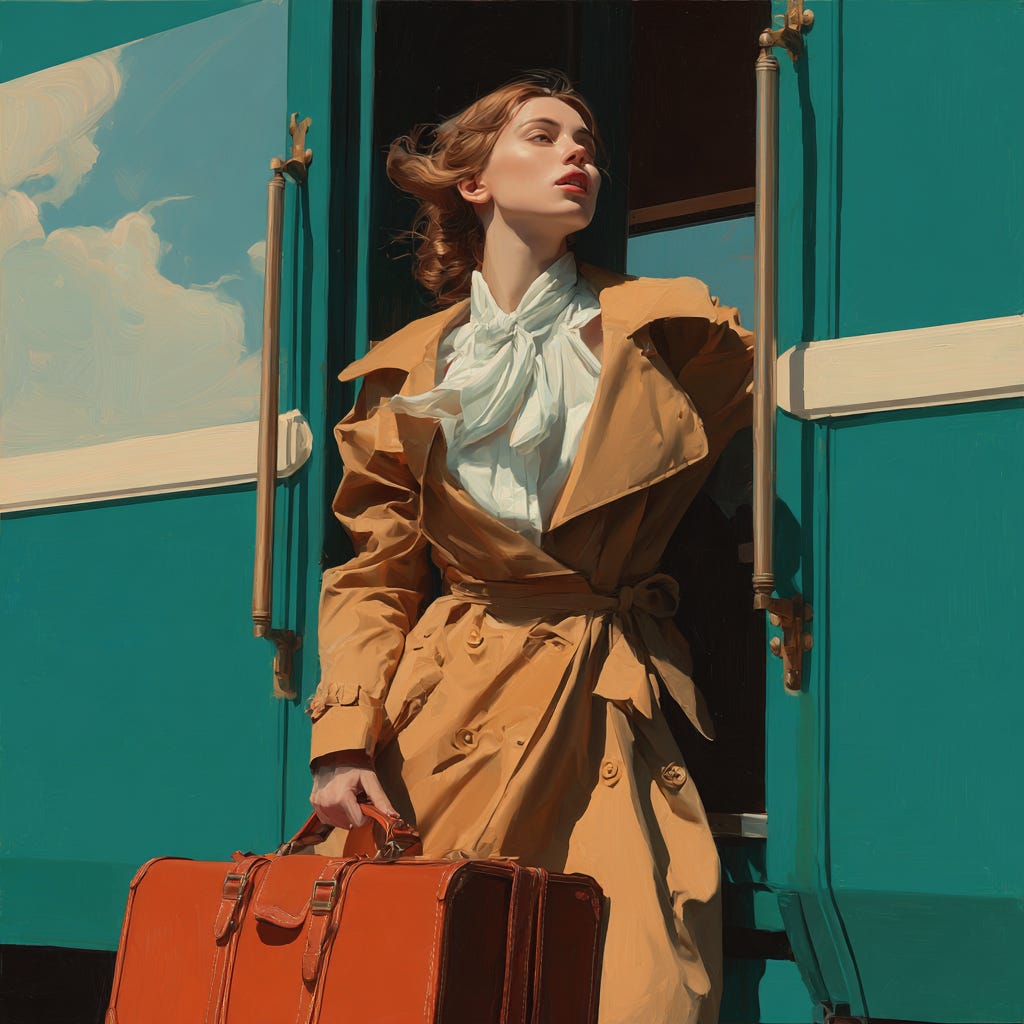
in this episode of The Modern Renaissance Podcast, Giacomo Gallazzi sits down with Sophie Defoe: born in Colombia, raised in Mexico, with Belgian roots, homeschooled as a child, and today building between art, hardware, startups, and global communities.
but this isn’t a story about “having a plan.”, it’s a story about what happens when you allow life to surprise you - and you’re brave enough to say yes.
accidental paths shape intentional lives
after a three years bachelors degree in Art History in Florence, Sophie wanted to go to study in Berlin, but she forgot to confirm the subscription email. The deadline passed. Berlin disappeared.
what was left was Munich - a city she didn’t want, didn’t choose, didn’t romanticize. And yet, that single missed click led her to join - by accident - a tunnel boring competition, building a 22-ton machine with an engineering team, despite having a background in art history.
that moment changed everything. It’s one of those life pivots that doesn’t come from clarity, but from availability. From saying “why not?” instead of “this isn’t for me.”
without that detour, Sophie says, she would probably still be doing academic research in art history.
engineering is art with consequences
one of the most interesting tensions in the conversation is how Sophie talks about engineering. She doesn’t describe it as a cold, technical domain - but as art that has to work.
building hardware, designing for manufacturing, solving logistical nightmares (funding, shipping a machine across continents during COVID, rerouting an entire team through Mexico just to reach the U.S…) becomes a creative act.
her humanities didn’t make her an outsider in engineering - they made her essential, cause every engineering project needs operational thinking, coordination, perspective-shifting in order to survive.
we are all polymaths at five years old
Sophie’s homeschooling experience reveals something uncomfortable:
children are naturally curious, multi-interested, and non-linear - until systems force them to choose. At 15, many education systems already demand a lifelong decision (and probably we’re never ready to take one). Homeschooling instead, for her, has been depth without foreclosure, cause you can go deep, then change, then go deep again and so on. Like her younger brother: he builds computers, studies philosophy, designs costumes. All in one: no one tells him to pick one and kill the rest.
the moral responsibility of building
Sophie explains what really fuels her energy: the idea that if you can build something that makes people’s lives better - and you don’t - that responsibility stays with you.
she gives a simple example: in three hours, she built an AI agent to handle WhatsApp messages for landlords. Her father went from spending 12 hours a week answering messages to almost zero. Now 65 landlords use it. Three hours of work turned into hundreds of hours returned every week.
and even though this may not be “world changing”, it underlies something more dangerous: realizing how little effort is sometimes needed to make a big difference.
increasing your surface area of luck
Sophie introduces a powerful concept regarding not knowing what’s next: surface area of luck.
given that you don’t predict the future, the best thing you can do is to place yourself where interesting things are more likely to happen, like applying randomly to programs, talking to strangers, following curiosity instead of certainty etc… That’s how she ended up in San Francisco.
San Francisco, without the myth
contrary to the european imagination, Sophie describes the Bay Area not as a Hunger Games arena, but as a place of radical cooperation: people who exited six companies take three hours to sit with you at a café, founders share data with near-competitors, introductions are made generously etc…
The underlying belief is simple: if we all succeed, we all win.
so, yes: competition exists - but it’s not toxic.
Scarcity is not the dominant narrative.
travel as education
after having visited 60 countries in two years, Sophie is sure that those trips worked as formation, also on managing money! She spent less traveling than she would have spent on rent, by pet-sitting animals to live for free.
travel dismantled who she thought she was, and of course she misses having a home, that she’ll want to put roots somewhere again. But right now, movement is the curriculum.
The Modern Renaissance as a signal
what Sophie found in The Modern Renaissance wasn’t just another international community, instead, she found a space where creation matters even when it’s not monetized, and people build not only startups, but themselves.
indeed, that’s our question: “what are you trying to bring into the world?”. That’s why this matters. The new Renaissance won’t be driven only by engineers or artists but by those who refuse to choose between the two.
final note
you don’t need a master plan, you need curiosity, courage, and the willingness to say yes to things you didn’t plan.
the rest will eventually emerge.