


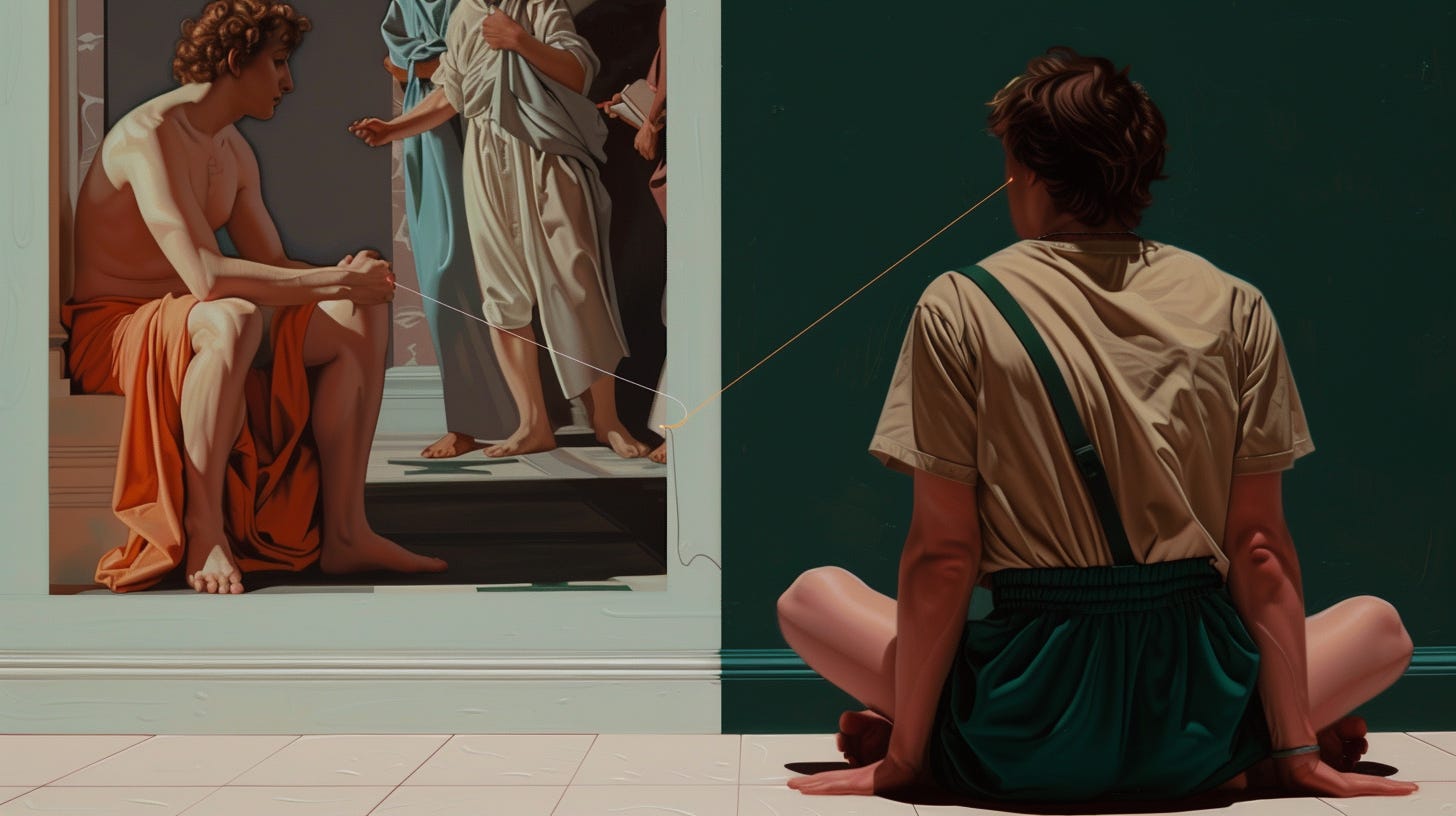
Against the myth of the lonely genius
How do you define the people you want to bring together when, in truth, you’d love to speak to everyone? How do you draw a line around something as vast as the desire to create, a desire that, in one form or another, lives inside all of us?
The people I’ve always wanted to meet and help don’t share the same background, studies, or goals. What they do share is a deep desire to create—to bring something into the world through the thousand means it offers. So how can I define them, when I believe everyone carries that desire somewhere, hidden in their heart? How can I choose a “niche” when I’d love to talk to anyone?
Here’s the beauty of putting yourself out there without asking for anything: you eventually attract the like-minded. You meet the ones who want to talk about this, who want to dig deeper into the beauty of it all. As Austin Kleon reminds us, what emerges isn’t just an audience—it’s a scenius. Because we’ve been lied, this whole time, about what artists are, grow and behave. We think about artists and geniuses as very lonely people, as those kind of characters that you’d find romantically and desperately looking for inspiration during a tempestuous night.
What is a scenius?
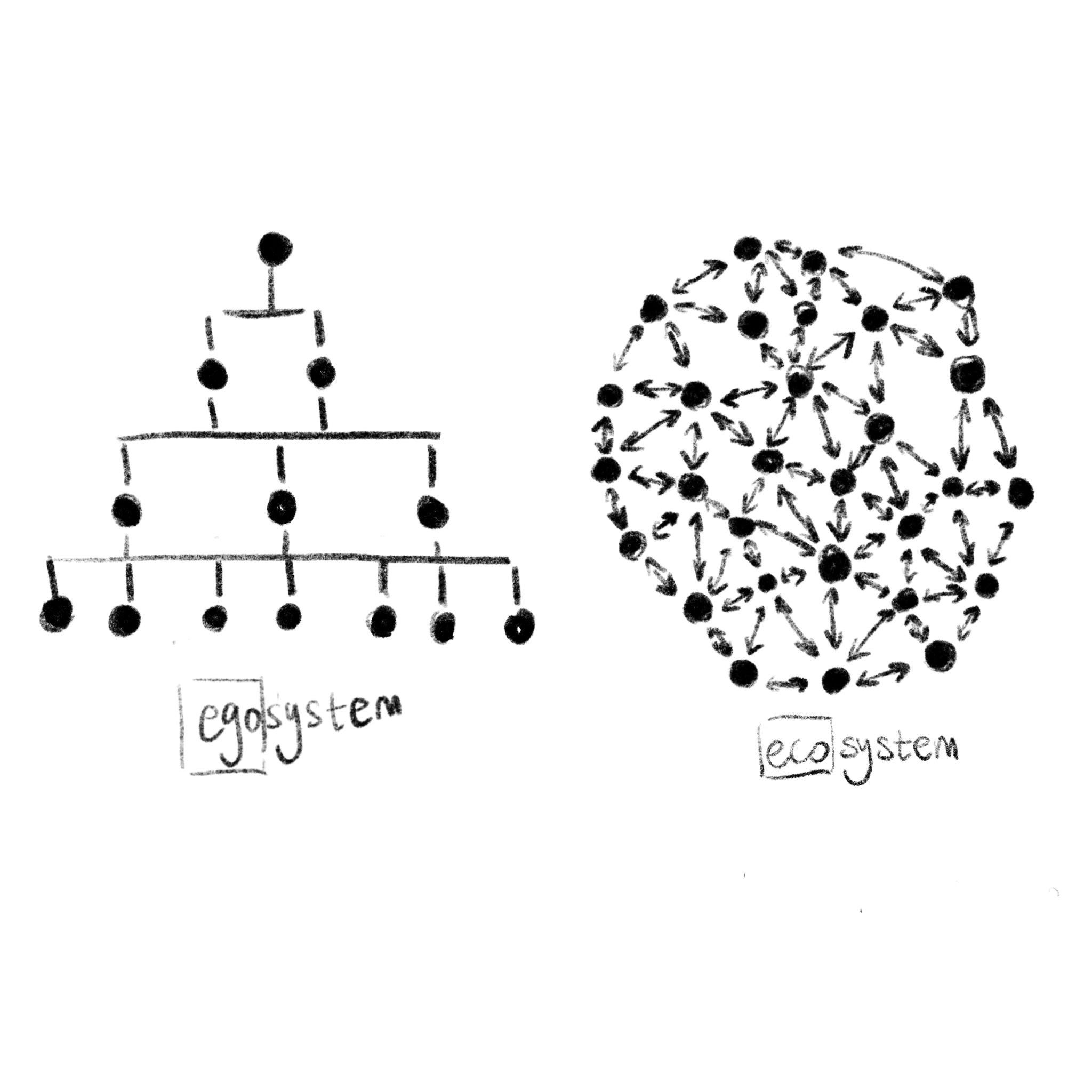
Brian Eno coined it as a way to break the myth of the lonely genius, the chosen one. We are often taught that the road to success is solitary, that the higher you go, the fewer people will understand you. True—many won’t understand the sacrifices, the strange choices, the reasoning behind certain steps. And yet, this doesn’t mean isolation. We mistake creativity for an ego-system, when in reality it has always been an eco-system.
The origin of the myth
The idea of the solitary genius is not ancient. It rose with Romanticism, when the poet or painter became the icon of creativity. In truth, even those we think as solitary figures — Leonardo, Michelangelo, Einstein — thrived in networks of patrons, rivals, collaborators, and communities of practice. They were never alone, but history prefers to flatten complexity into a single name, a single and understandable label. As Robert and Michèle Root-Bernstein remind us, the creative process is universal: whether in art or science, breakthroughs are almost always fed by cross-pollination.
Why we idolize loneliness
If collaboration has always been the soil of innovation, why does the myth of the lone genius persist? Because it is simpler, cleaner, easier to celebrate. It is easier to market a single “chosen one” than the messy collective that lifted them. Capitalism loves the story of the founder-hero, the CEO as prophet. Even academia rewards hyperspecialization, which fragments knowledge and discourages the kind of integrative worldview Plato once considered essential. And at a personal level, solitude feels noble (especially since it’s difficult) compared to the vulnerability of sharing unfinished ideas. The ego prefers isolation to dialogue. And it’s a narcissistic perpetuation of looping thoughts.
But then I wonder: is there a way to actually see this eco-system at work? To understand if all the different inputs colliding around us really merge into something innovative, something different? How do people react in that very moment? How much of the impact we have can be felt at the instant of collision?
Too many questions for writing. Maybe for a lifetime of research. But still, one thing is clear: being part of a scenius means recognising that most work is not born in solitude. It is the result of artists, thinkers, and builders holding each other up. It’s the realisation that our sparks grow brighter when they meet.
Being part of a scenius is nothing extraordinary. It’s the quiet recognition that our ideas breathe through others, that creation is a dialogue, not a monologue. And perhaps that’s the most comforting truth: we don’t have to carry the weight of beauty alone.
How to be part of a scenius
This doesn’t require luck nor fame. It requires showing up.
Find your people, not your audience. Stop looking for followers; look for co-conspirators. The ones who light up at the same questions you can’t stop asking.
Trade sparks. Share unfinished work, messy drafts, half-formed ideas. Let them breathe in the presence of others. The collisions matter more than the polish.
Build rituals of exchange. A weekly circle, a newsletter thread, a shared studio hour, or a community like the one we’re building!
Give more than you take. Scenius is anti-transactional. It grows when you uplift, amplify, recommend, and celebrate others. What you give comes back brighter.
Stay porous. Polymaths know this well: breakthroughs rarely come from inside your own lane. Keep the borders of your curiosity open.
To be part of a scenius is to choose the eco-system over the ego-system. Not because it’s easier, but because it’s richer. Because ideas, like fire, need oxygen, and the air is always clearer when others are breathing with you.
What is The Modern Renaissance?
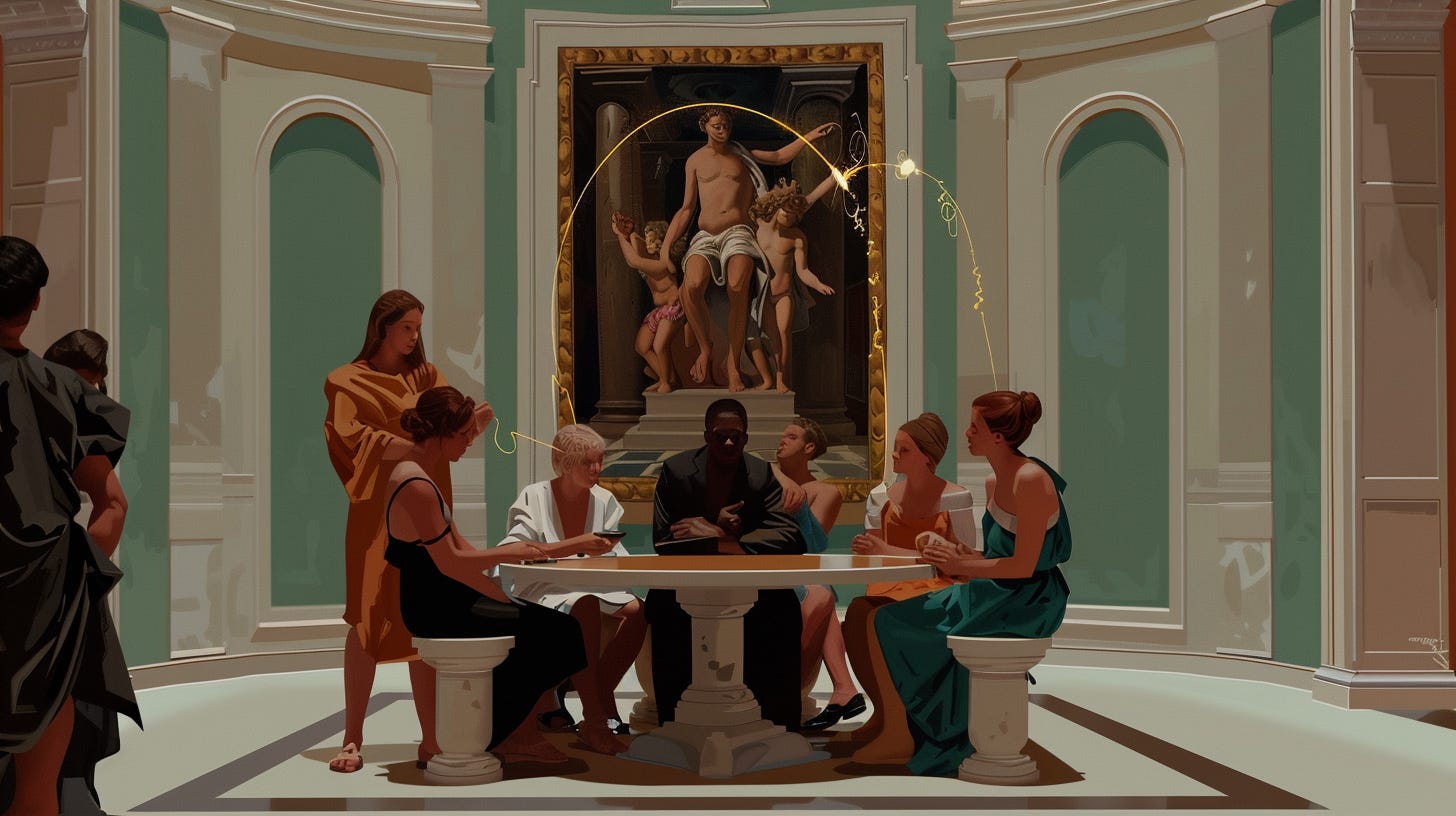
The Modern Renaissance is our attempt to build scenius deliberately. A place where polymaths, artists, scientists, and builders of all kinds come together, not to chase titles or niches, but to exchange sparks. It’s for those who refuse to choose between passions, who believe beauty and knowledge grow brighter in dialogue. Think of it as an ecosystem of creation, a map of collisions, a not-so-quiet rebellion against the myth of the lonely genius.
And we’re beginning. Our first nano cohort is starting soon: a small circle where ideas, projects, and curiosities collide by design. If you’ve been waiting for a sign to step into a scenius of your own, this is it.
Join The Modern Renaissance: https://golden-heliotrope-3cc.notion.site/tmr?pvs=74
Missed the app window :/ but great idea! I’ll be looking out for the next one!
I love this term "scenius" - Being among like-minded people is an accelerator unlike any other, and most importantly it also normalizes what we want to achieve in life :)